Attingham Park, Shropshire

Jul 30, 2024 | British Isles Tour

After my recent National Trust rant about signage – what a joy to visit Attingham Park.   Great information easily shared.  Just right, or perhaps even perfect!

We couldn’t give the visit as much attention as we’d have liked, and we need to return.

A lovely entrance and a delightful play area called ‘Field of Play’– awesome.

In the short time we had for the visit we focused on the walled gardens and one of the shorter river sidewalks.
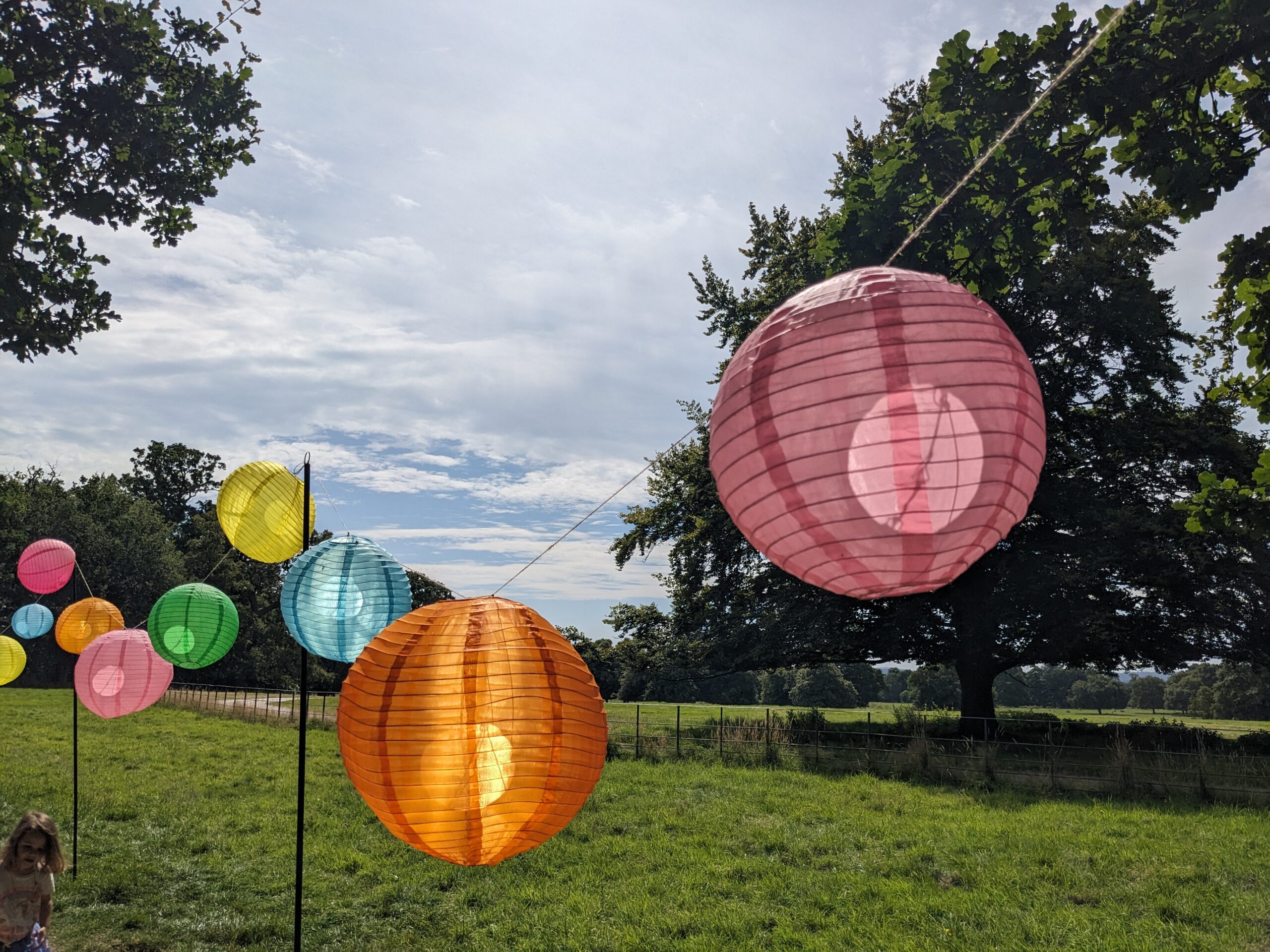
Hung from a wire, moving from right to left and into the distance, spherical paper lampshades dipping and rising with the wire, pink, orange, blue, yellow green, pink, orange, pink, blue and yellow. Standing guard at the path line at the entrance to Attingham Park in Shropshire.
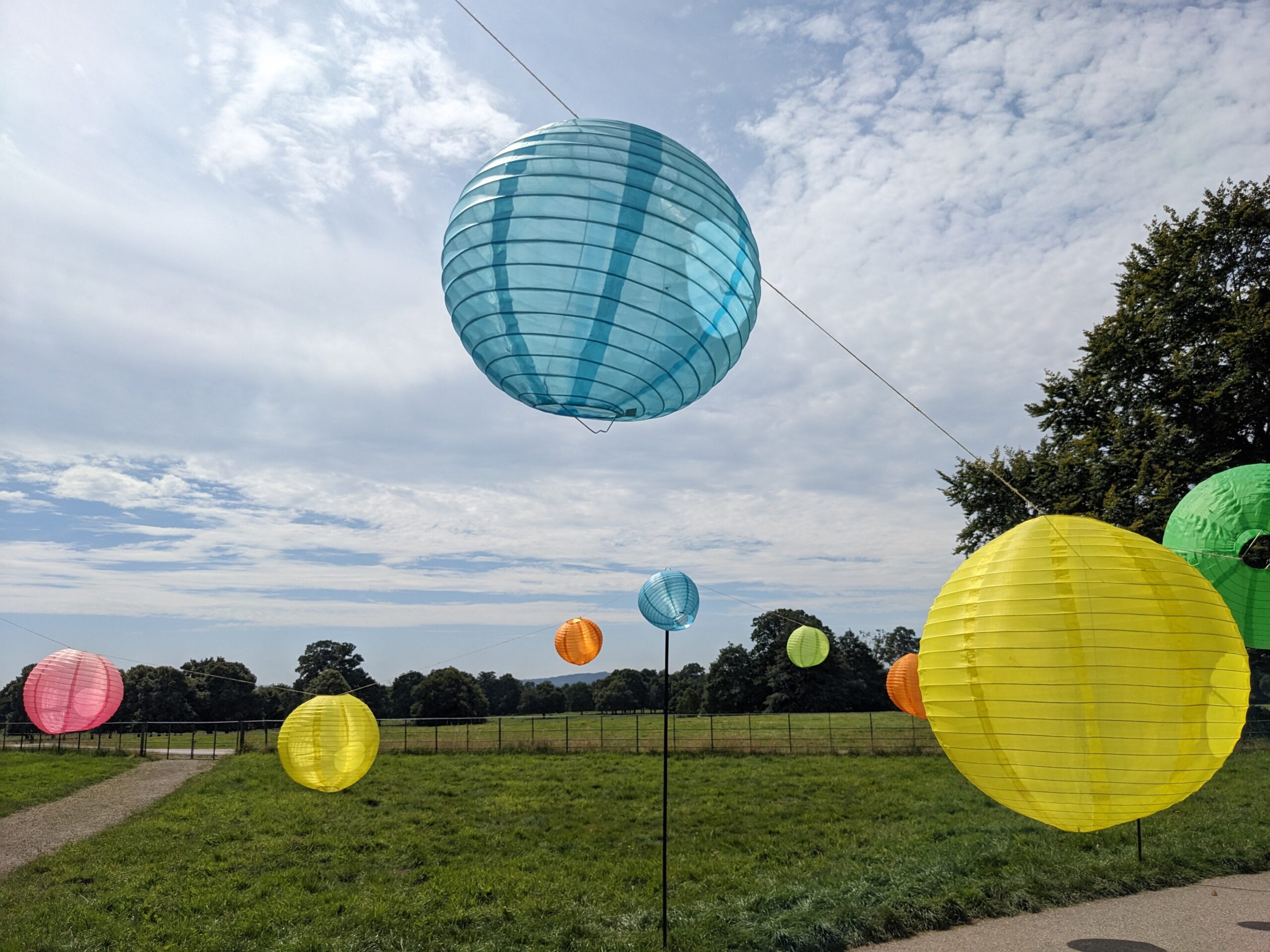
Hung from a wire, spherical paper lampshades in different colours, blue, yellow, green, and further away, left to right, dipping and rising with the wire, pink, yellow, orange, blue, green and orange. Decorating a view of mown grass, a horizon line of mature trees and a flat thin cloud filled blue-grey sky.
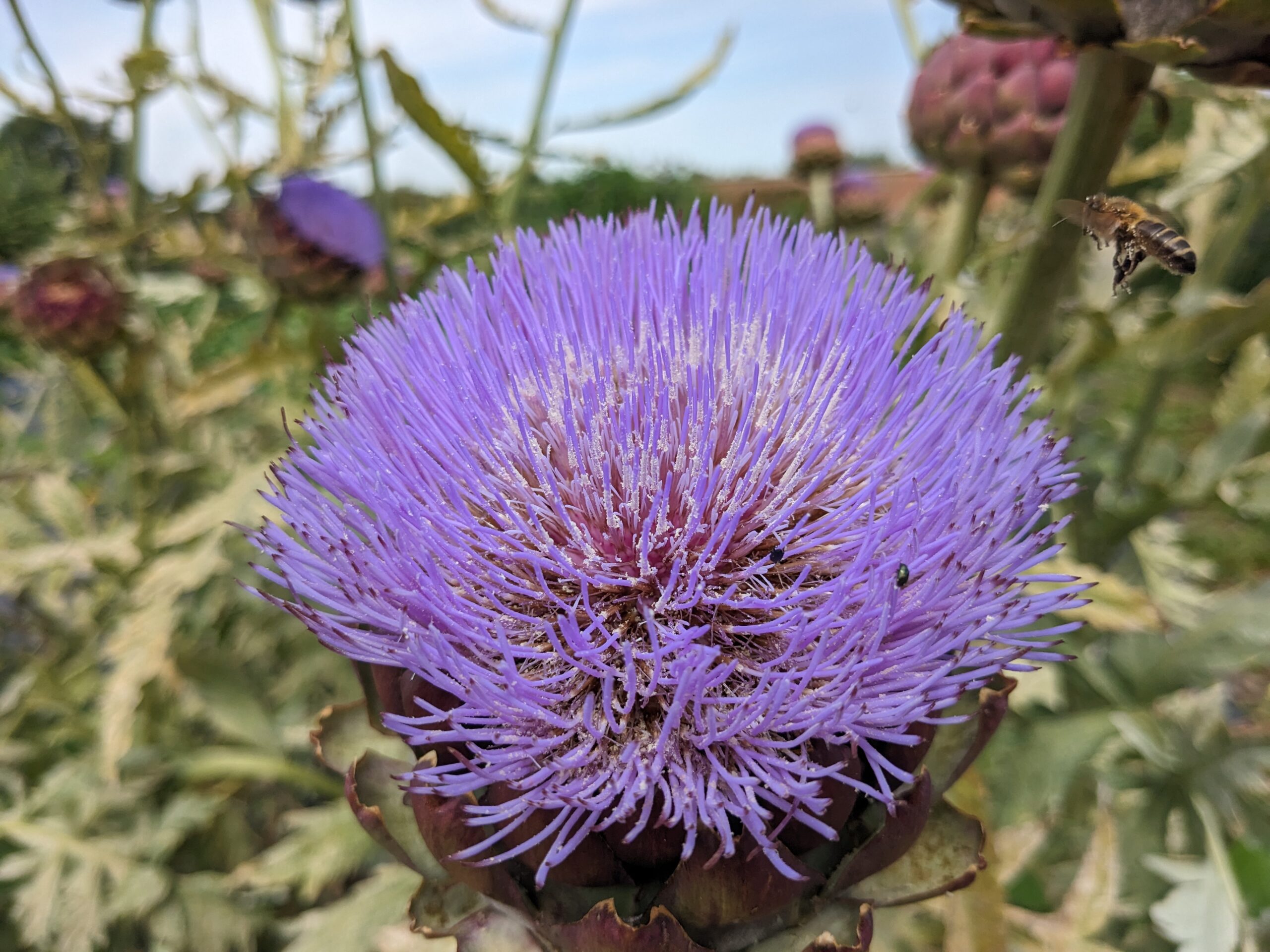
Looking down on top of a mass of single purple soft looking spikes. White and maroon hues visible nearer the base of the spikes. To the right a honey bee in flight as it either approaches or departs the Cynara also known as the Artichoke Thistle.
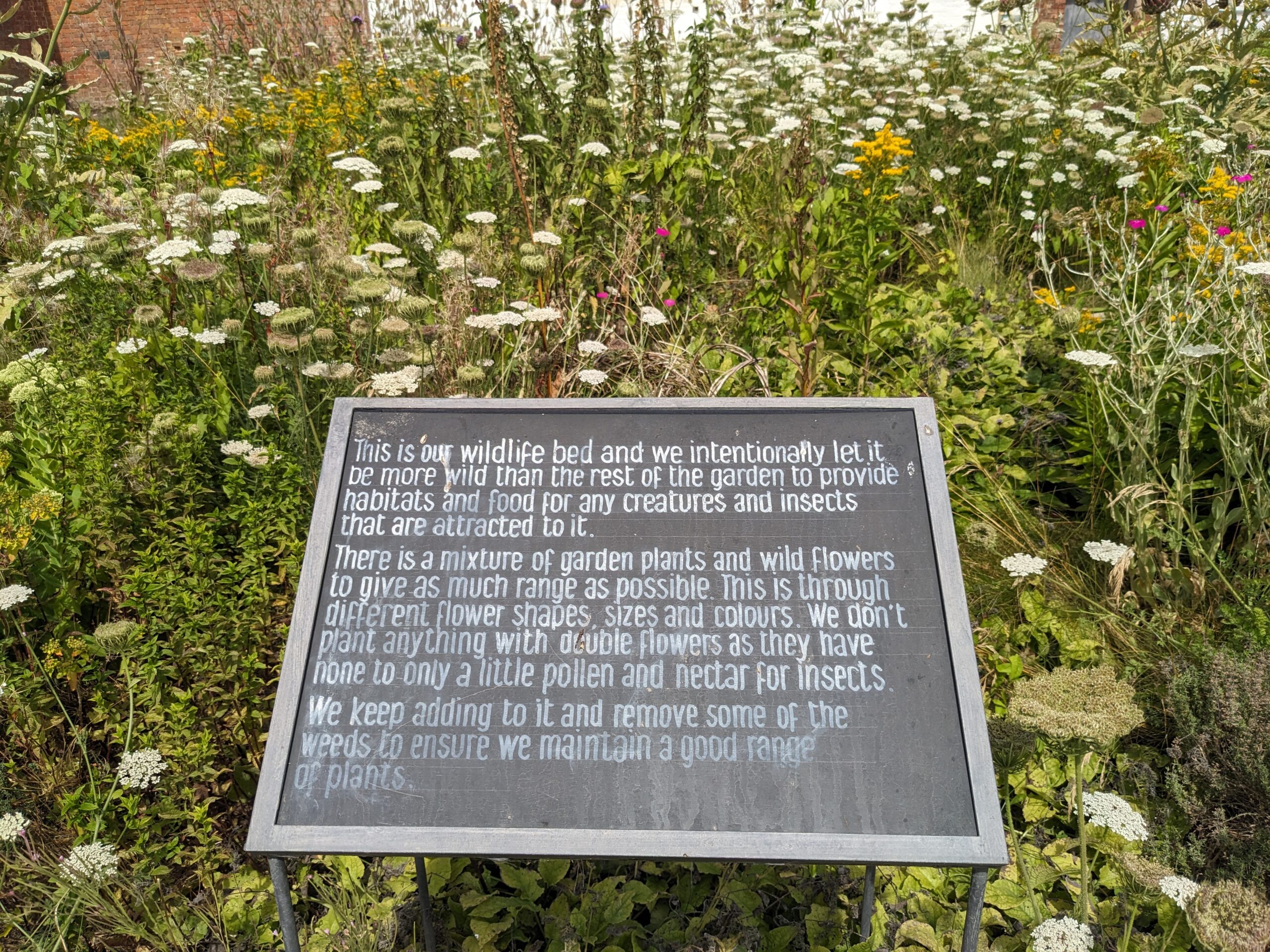
Within a full flower bed with colours of mainly green and white but also red and yellow. A sign reading "This is our wildlife bed and we intentionally let it be more wild than the rest of the garden to provide habitats and food for any creatures and insects that are attracted to it. There is a mixture of garden plants and wildflowers to give you as much range as possible. This is through different flower shapes, sizes and colours. We don’t plant anything with a double flower as they have none to only a little pollen and nectar for insects. We keep adding to it and remove some of the weeds to ensure we maintain a good range of plants.”
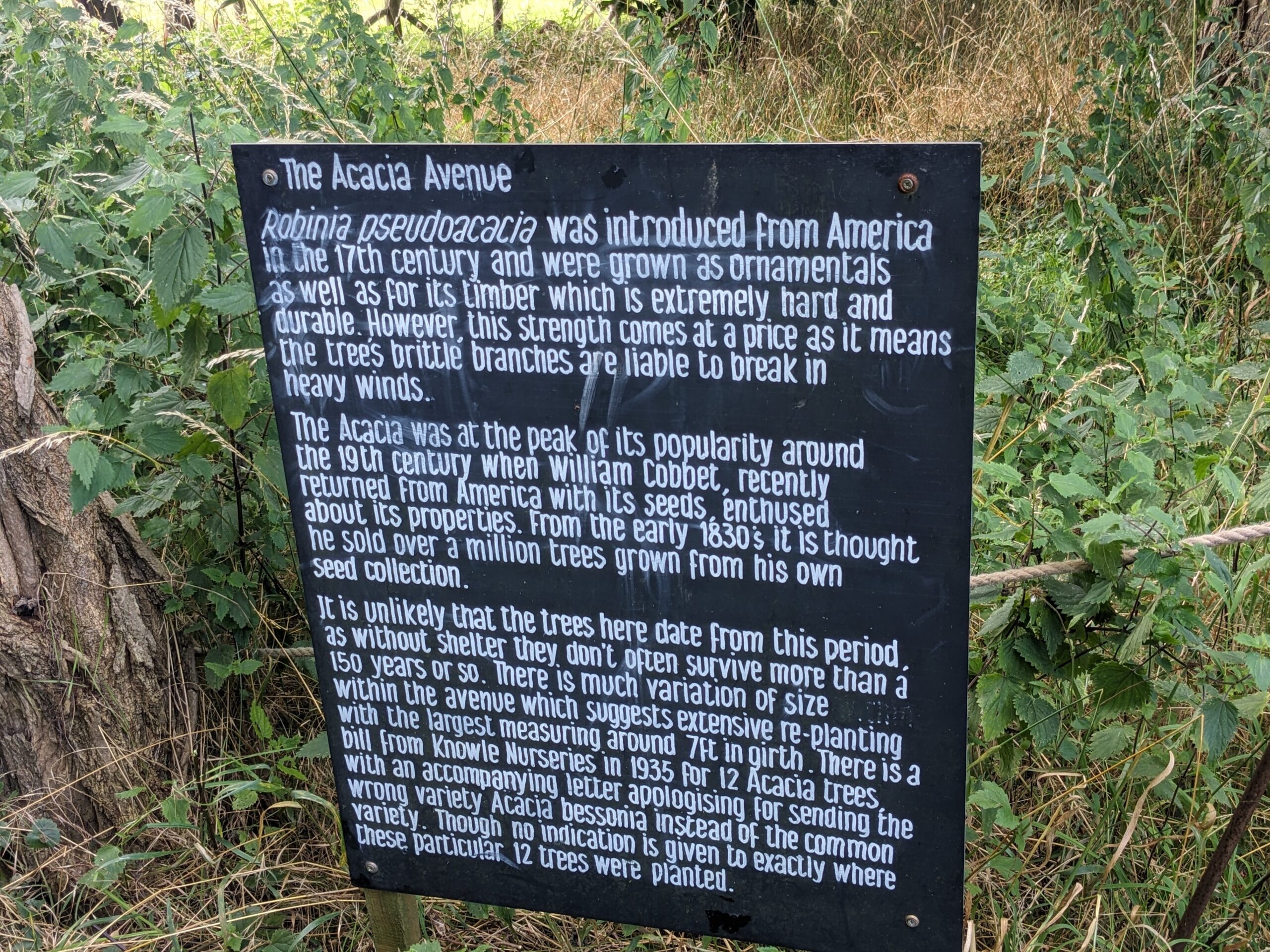
Sign Reads: The Acacia Avenue Robinia pseudoacacia was introduced from America in the 17th century and were grown as ornamentals as well as for its timber which is extremely hard and durable. However this strength comes at a price as it means the tree's brittle branches are liable to break in heavy winds. The Acacia was at the peak of its popularity around the 19th century when William Cobbet, recently returned from America with its seeds enthused about its properties. From the early 1830's it is thought he sold over a million trees grown from his own seed collection. It is unlikely that the trees here date from this period as without shelter they don't often survive more than 150 years or so. There is much variation of size within the avenue which suggests extensive re-planting with the largest measuring around 7ft in girth. There is a bill from Knowle Nurseries in 1935 for 12 Acacia trees with an accompanying letter apologising for the sending the wrong variety Acacia bessonia instead of the common variety. Though no indication is given to exactly where these particular 12 trees were planted.
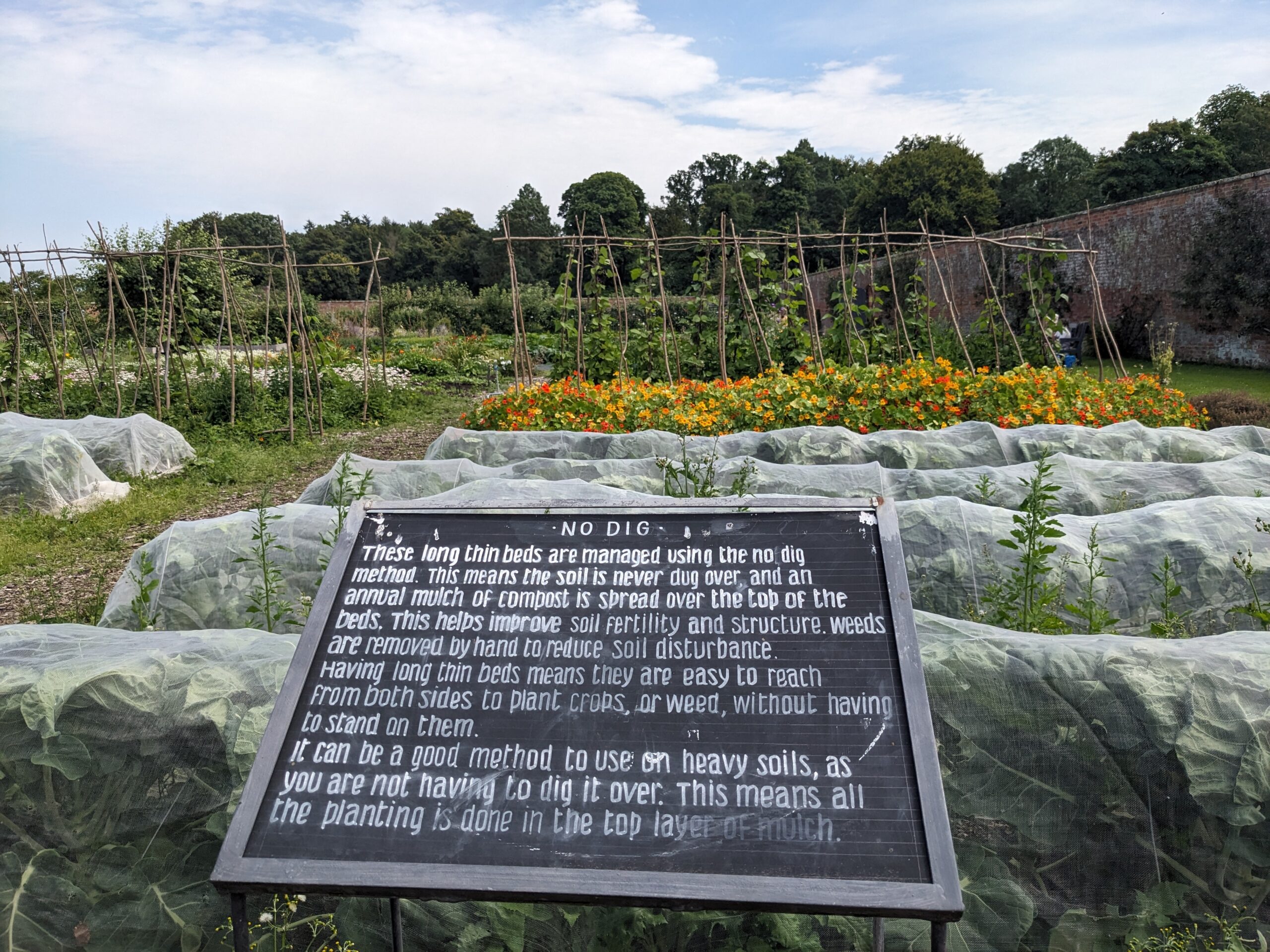
View of a garden, hazel poles or similar create a long A frame to support a crop of orange and yellow at its base. In front of this, left to right, large green leaved crops covered by white net create four rows of long curved translucent humps. Against the first row a blackboard reading: “ No Dig. These long thin beds are managed using the no dig method. This means the soil is never dug over and an annual mulch of compost is spread over the top of the beds. This helps improve soil fertility and structure. Weeds are removed by hand to reduce soil disturbance. Having long thin beds means they are easy to reach from both sides to plant crops or weed without having to stand on them. It can be a good method to use on heavy soils as you are not having to dig over it. This means all the planting is done in the top layer of mulch.”
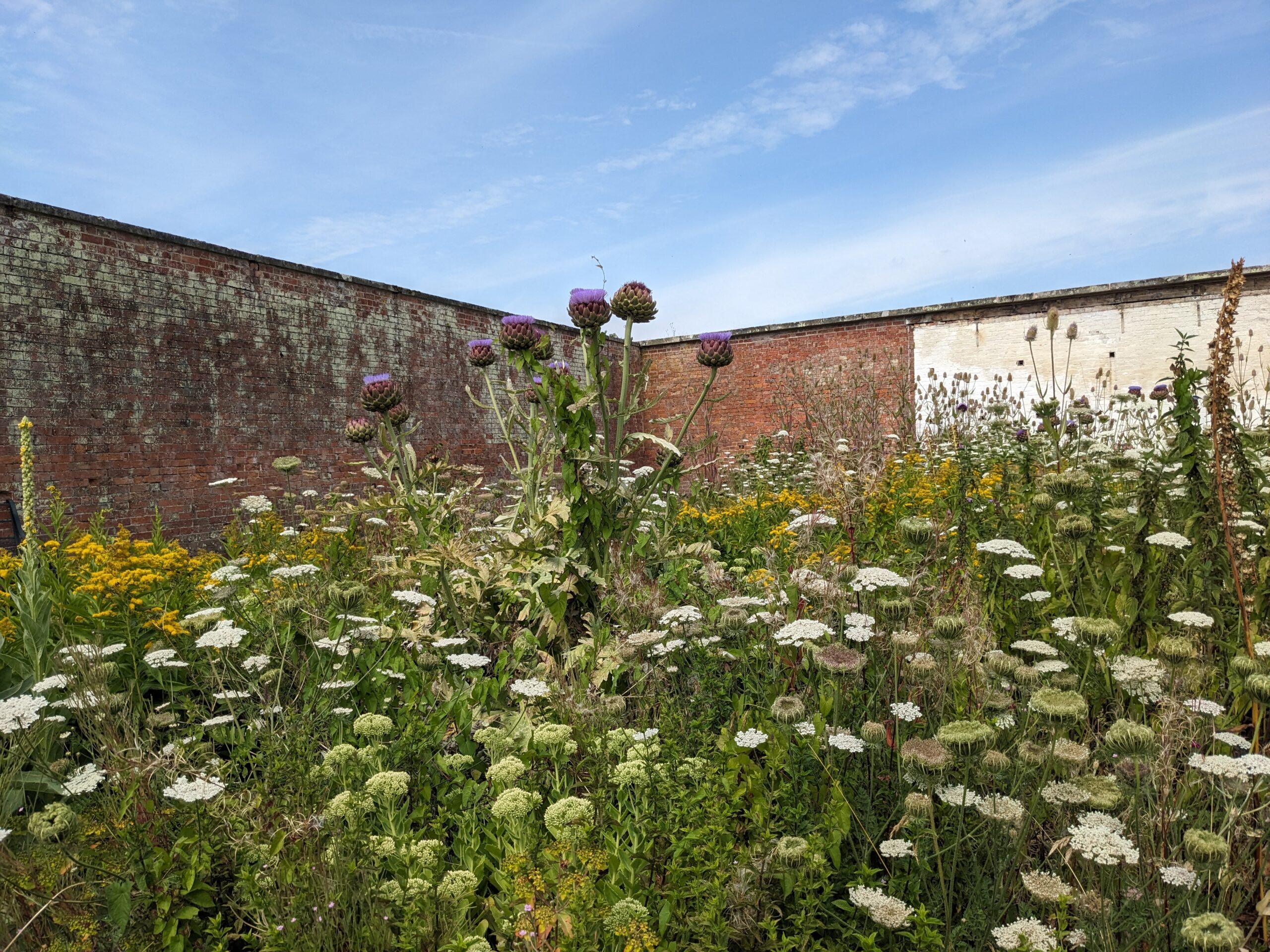
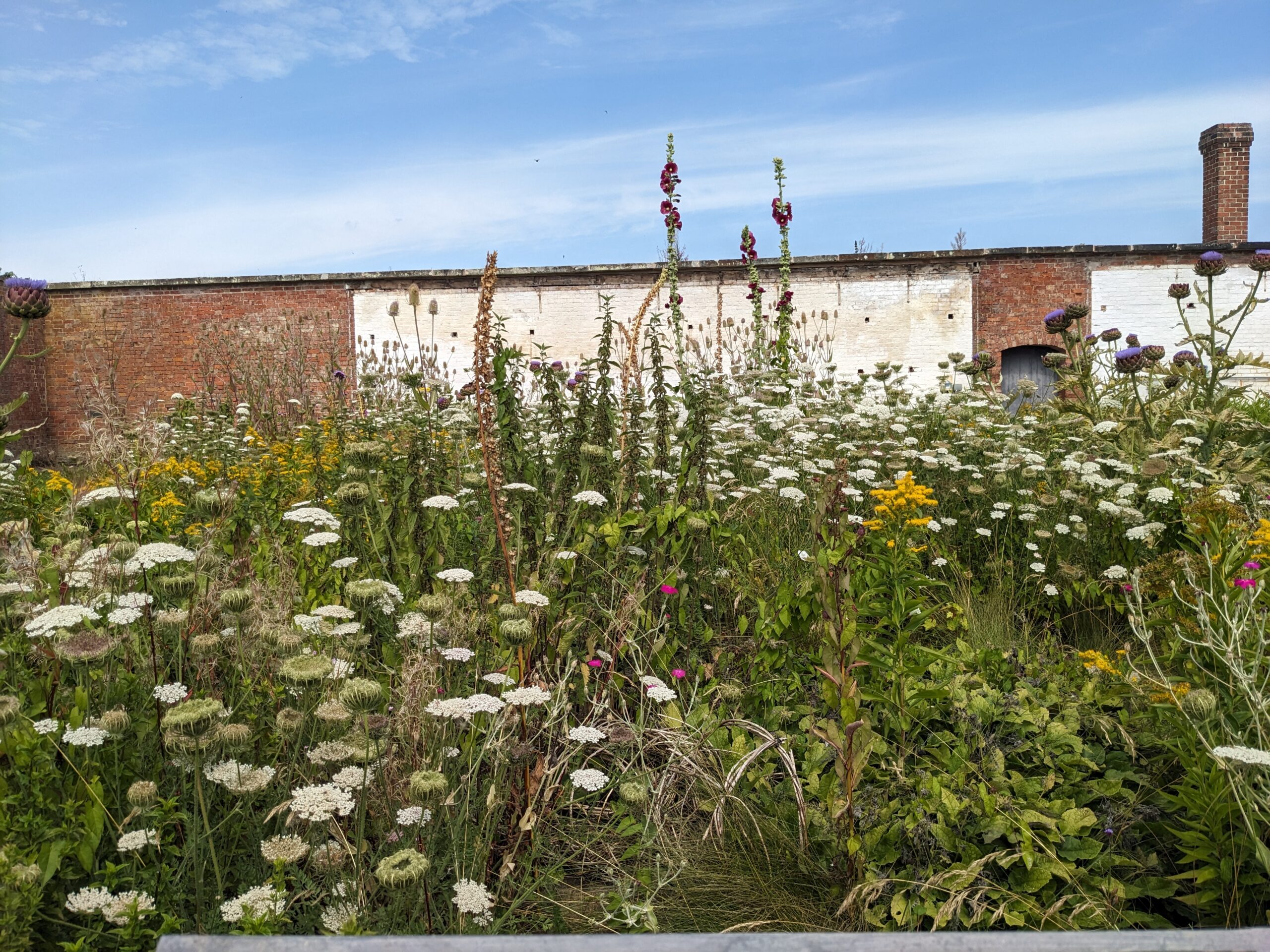
A mix of wild flowers, heads of broad dishlike white green, yellow, white and purple. Artichoke thistle and foxgloves.
A mix of wild flowers within a kitchen garden bed, heads of broad dishlike white green, yellow, white and purple. Artichoke thistle and foxgloves.
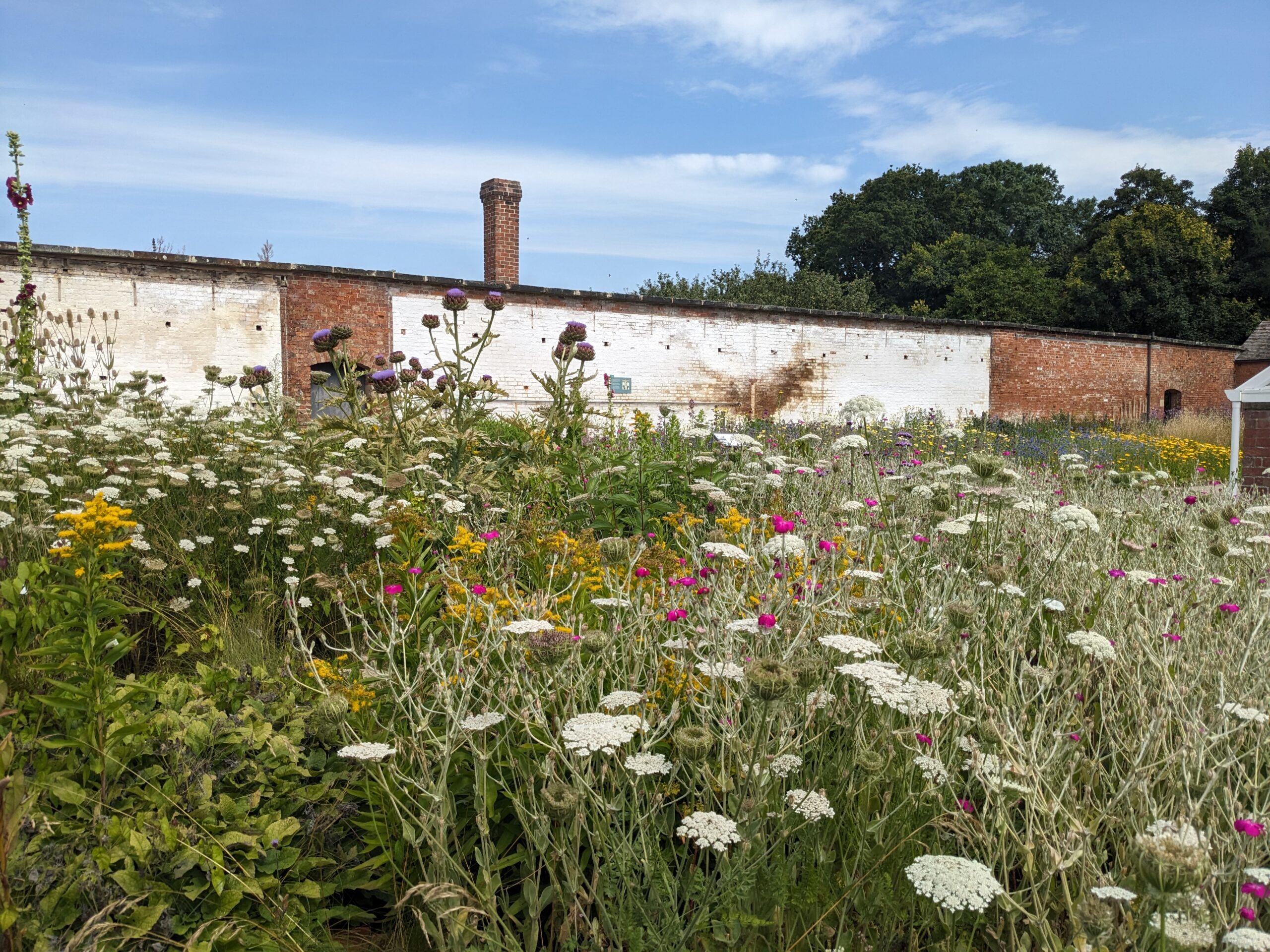
Wildlife flower beds with a mix of planting to encourage wild life. In this bed, within the walls of the kitchen garden, white, pink, yellow and purple flowers.
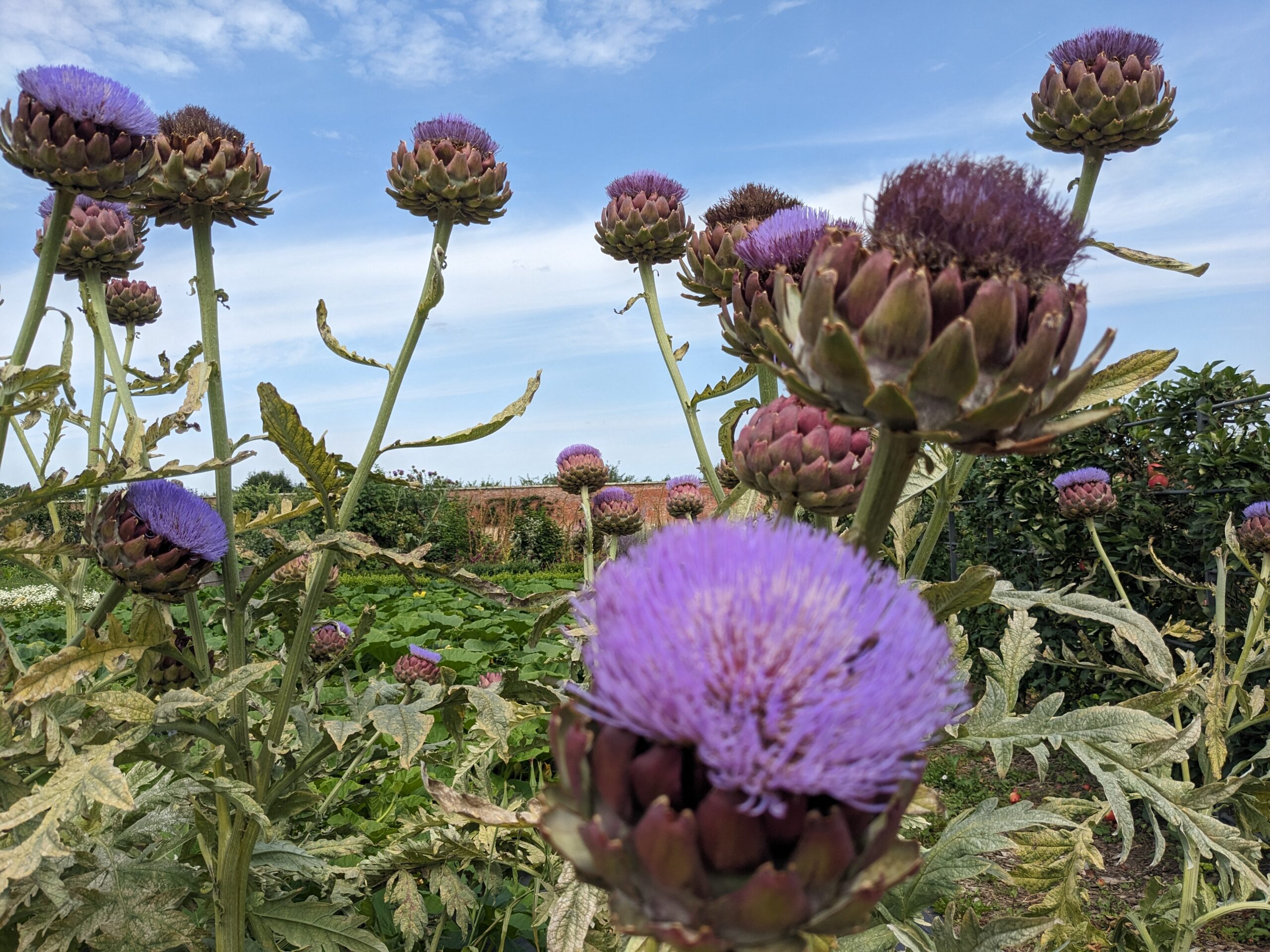
In the foreground a flower head with large purple thistle crown with fleshy overlapping yet opening triangle petals in purple-green beneath. These triangle shape petals broad side down, point at top. Behind several more of these flowers, standing tall on single stems, with jaggered alternative well-spaced leaves along them. A blue sky behind.
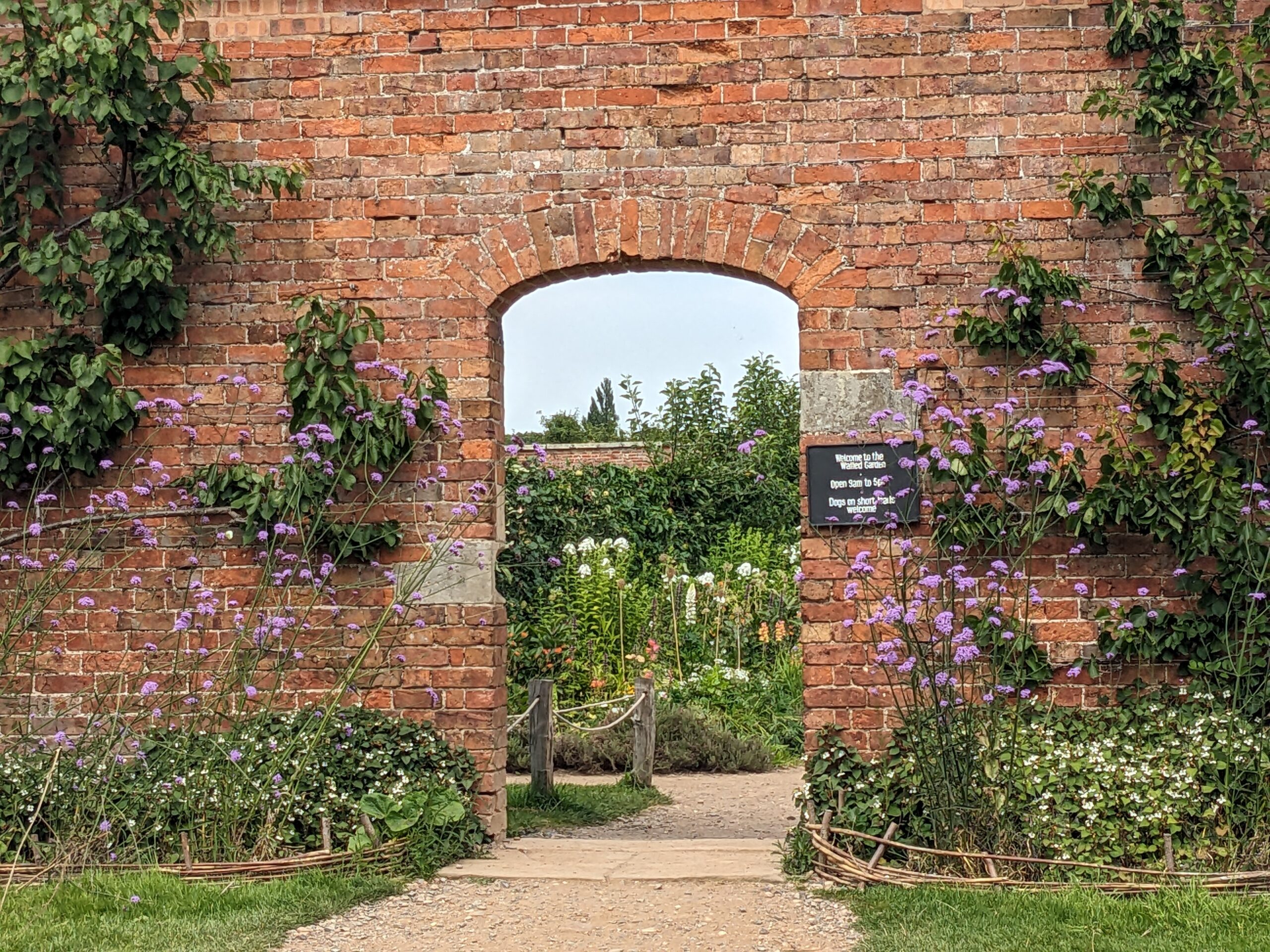
A beige soft stone/gravel path between grass leads up to a soft arched opening in an old brick wall. Against the wall a sign and some climbing foliage. Infront of the wall, tall purple flowers either side, underplanted with a shorter denser white flowered plant. Through the doorway, the next garden can be seen. Tall stems with perhaps parallel right angle leaflets and white linear and more bauble blooms are most prominent. Beyond them a further foliage covered brick wall.
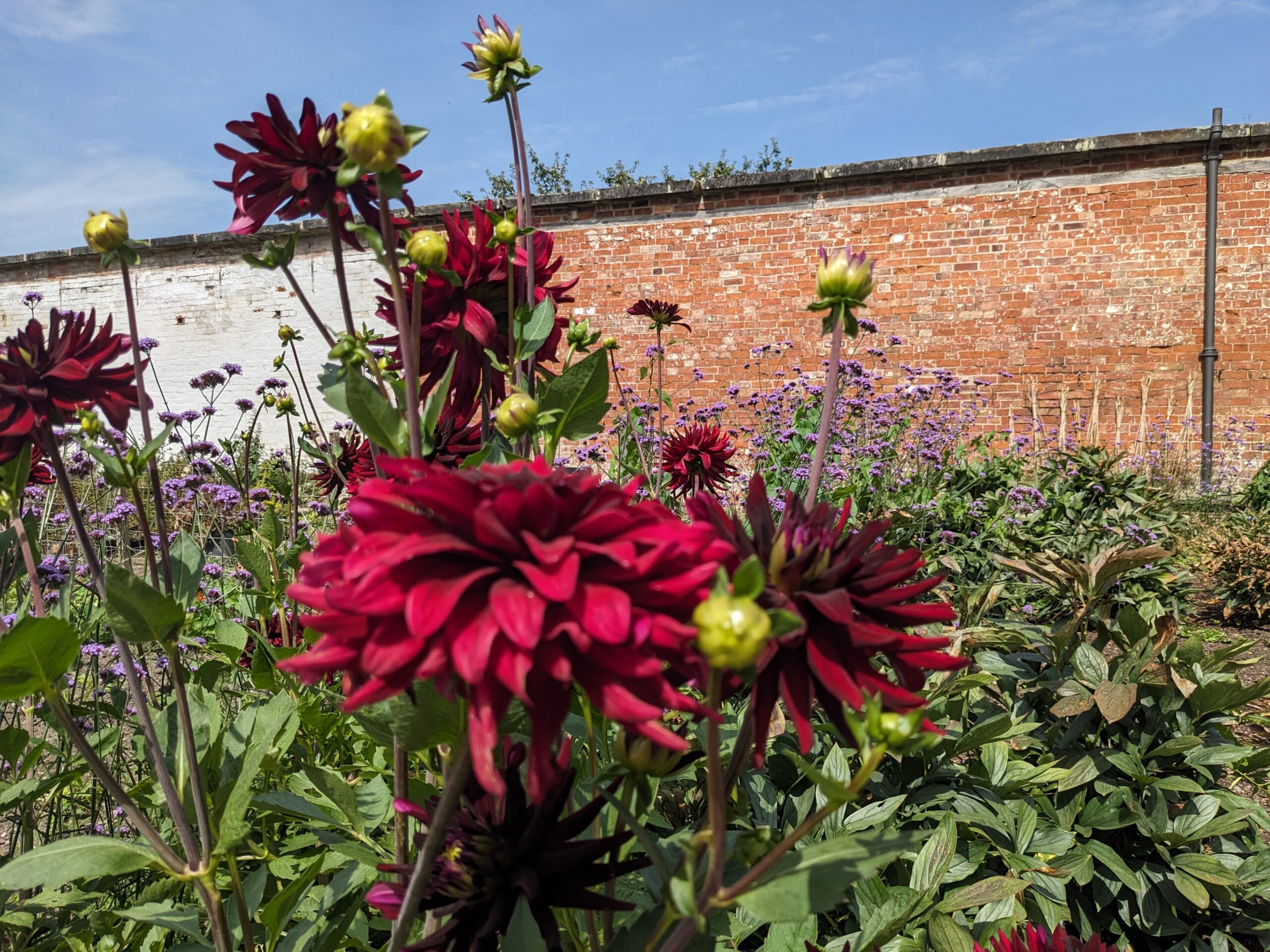
Ruby-red elongated pointy petals stacked alternately above one another, a side on view of a dahlia. Beyond several more ruby-red dahlias of various height stems and with various thickness of bloom. A few tight green knobbly spherical buds too. Beyond tall purple flowers and further back still the wall of the garden, one section to the left whitewashed. The section from the centre to the right, brick.
Several metal wheelbarrows with tyred front wheels, leaning up against the low brick wall of the glass house.
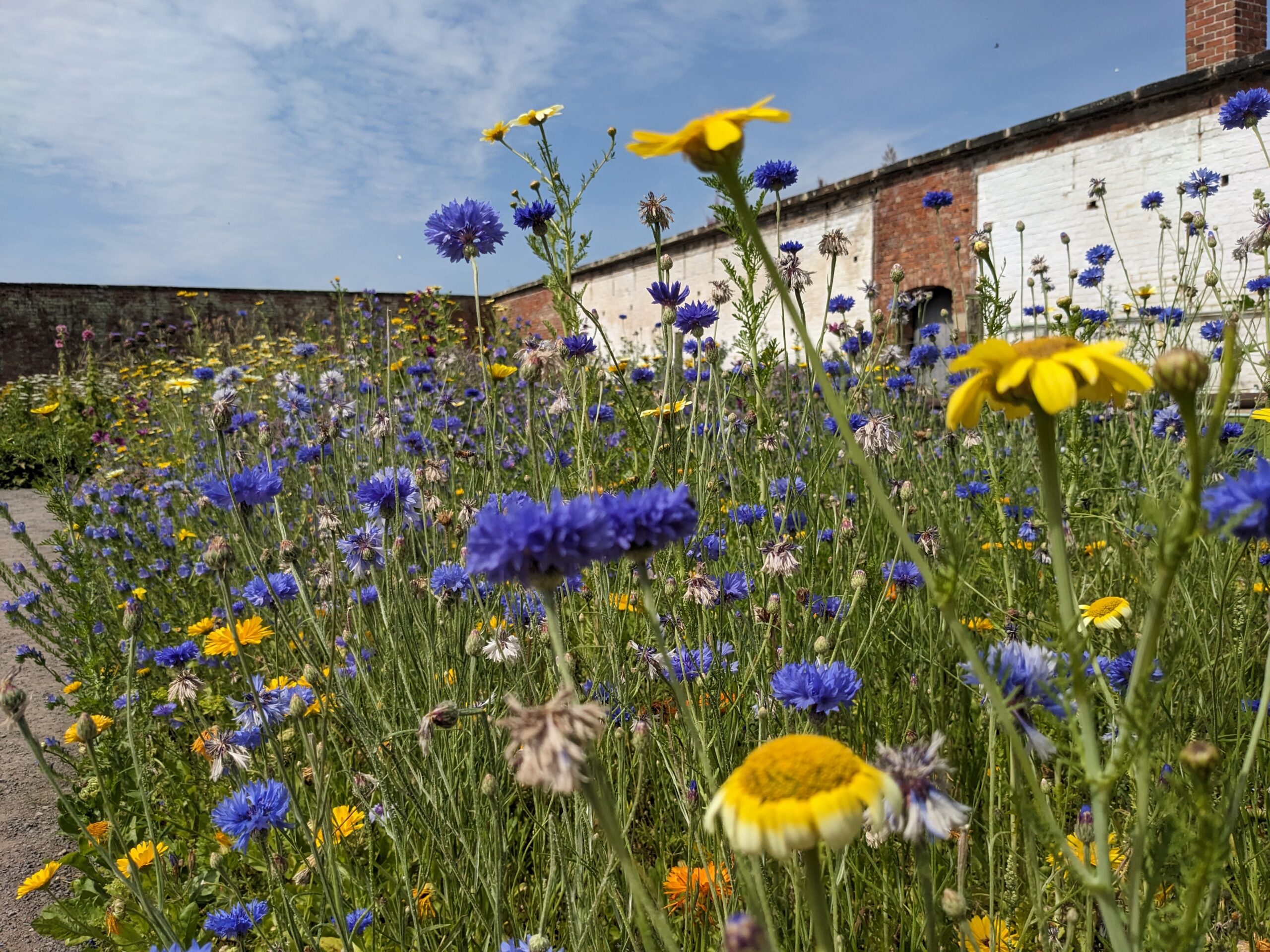
A wildflower boarder within the kitchen garden with tall vibrant blue and yellow flowers.
Sign Reads: The Acacia Avenue Robinia pseudoacacia was introduced from America in the 17th century and were grown as ornamentals as well as for its timber which is extremely hard and durable. However this strength comes at a price as it means the tree's brittle branches are liable to break in heavy winds. The Acacia was at the peak of its popularity around the 19th century when William Cobbet, recently returned from America with its seeds enthused about its properties. From the early 1830's it is thought he sold over a million trees grown from his own seed collection. It is unlikely that the trees here date from this period as without shelter they don't often survive more than 150 years or so. There is much variation of size within the avenue which suggests extensive re-planting with the largest measuring around 7ft in girth. There is a bill from Knowle Nurseries in 1935 for 12 Acacia trees with an accompanying letter apologising for the sending the wrong variety Acacia bessonia instead of the common variety. Though no indication is given to exactly where these particular 12 trees were planted.
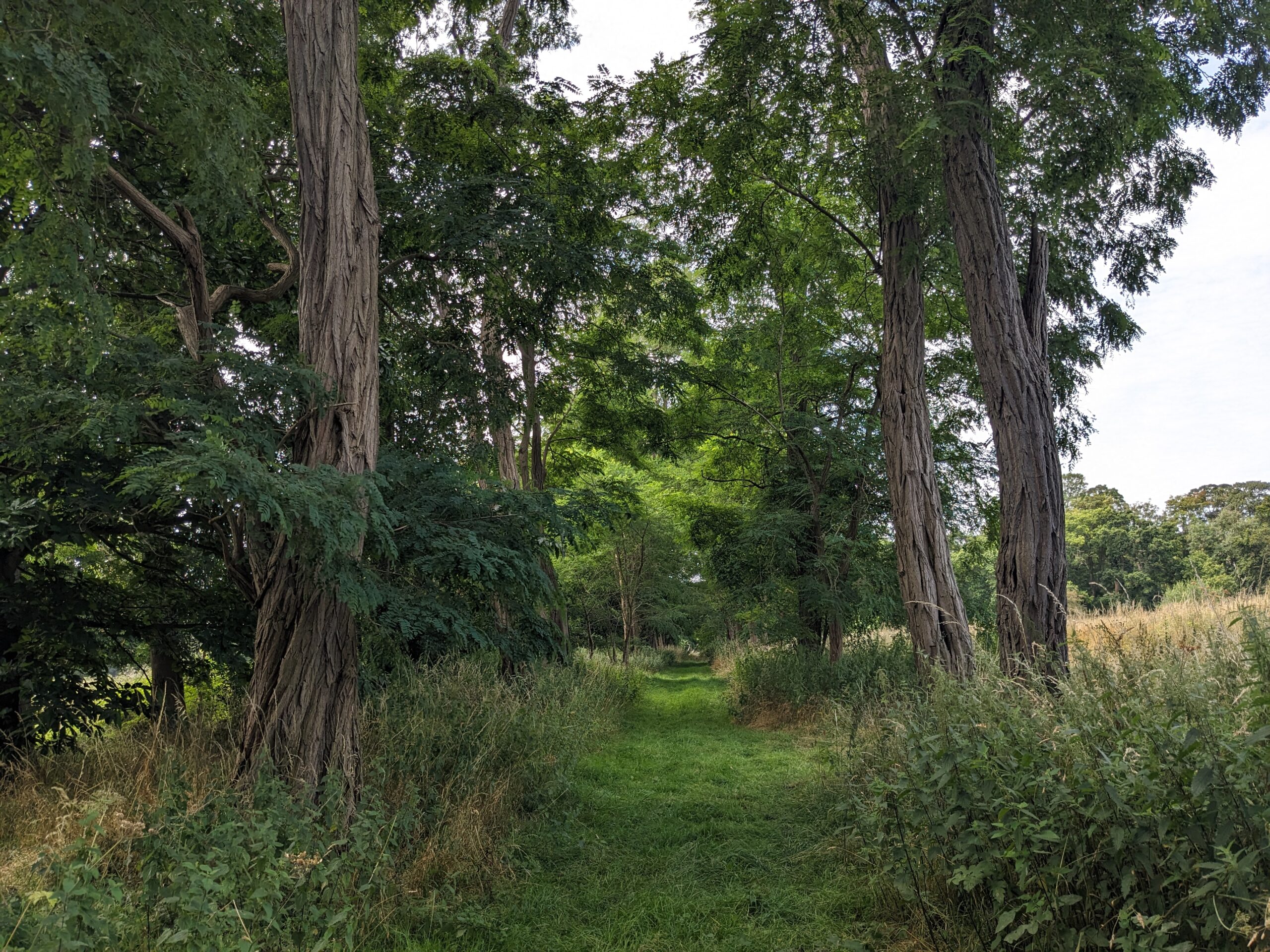
An avenue of Acacia Trees - Robinia pseudoacacia. Two lines of trees creating an avenue. A shorter grass path between them with longer gras around the trees. The foliage of the trees starting quite high allowing the deep vertical fissions in the bark to be admired.
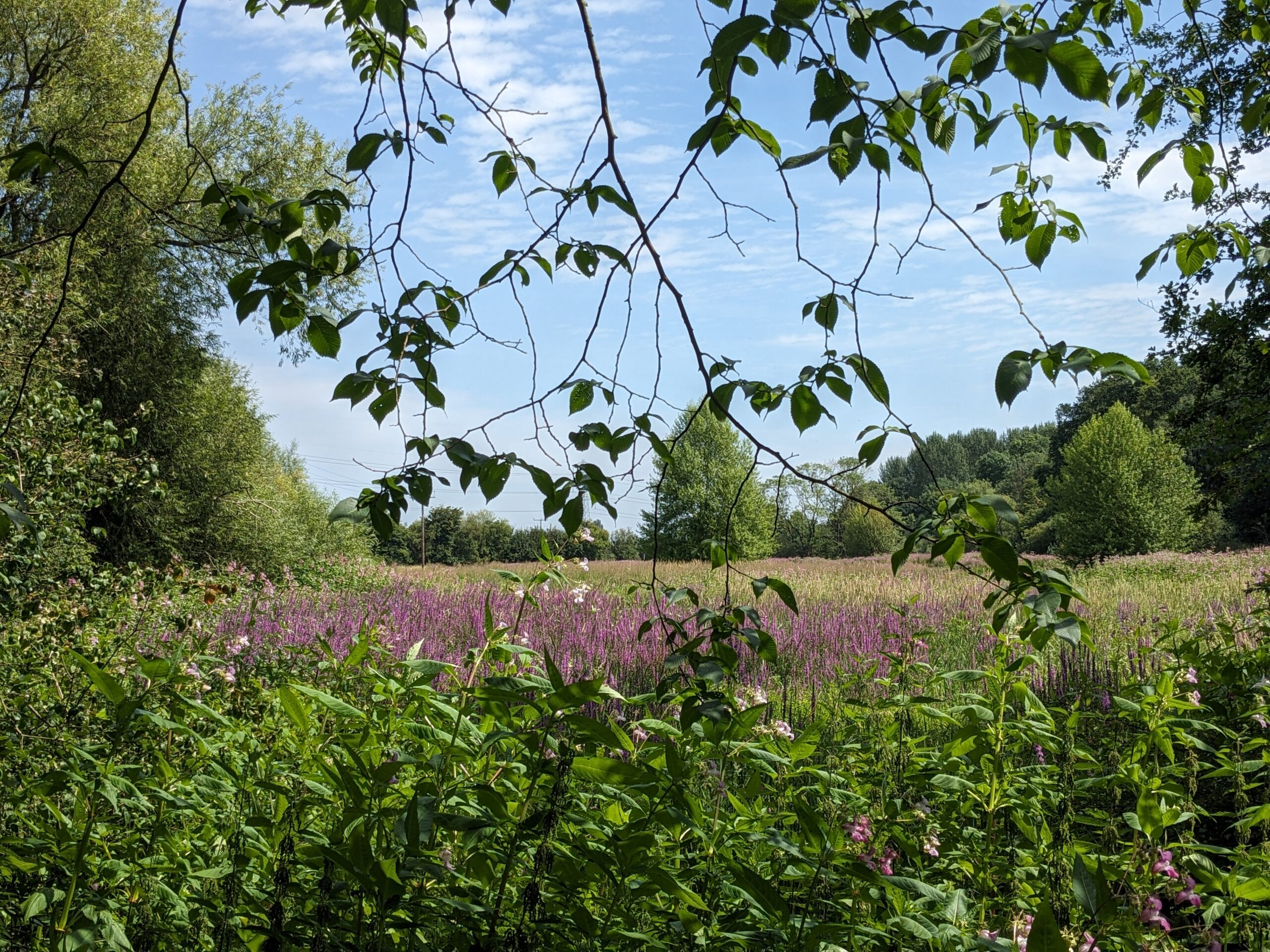
Twig branches of foliage hang from above. Tall wild foliage grows up from the path edge. Beyond a meadow with a clump of purple as well as green. The meadow edged by trees with two medium lone standing shrubby trees central and to the right within the meadow.
Looking across a meadow from the path.  A wildflower hedge spreads across the meadow, with some individual shrubby trees within the meadow.
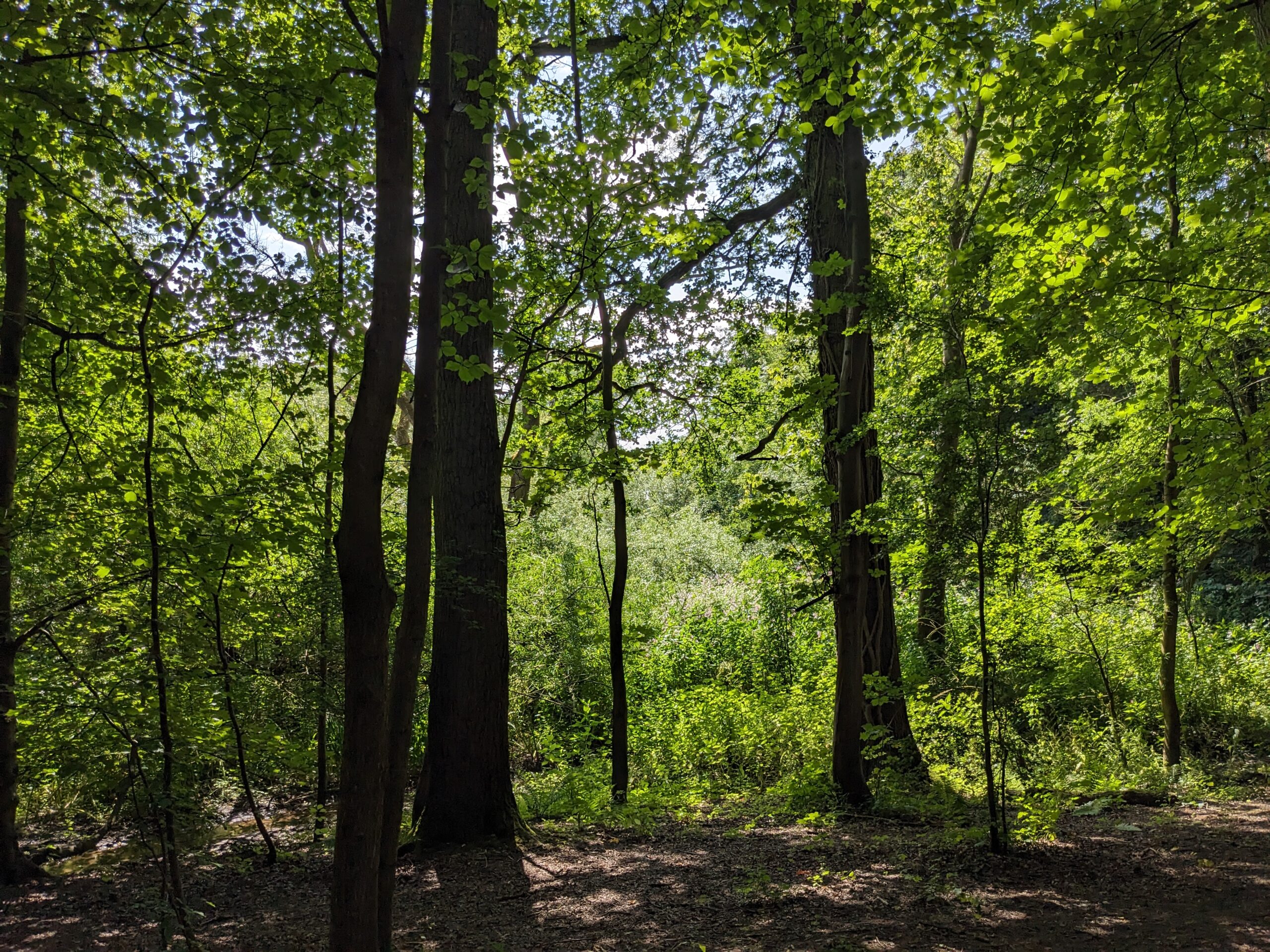
Leaf canopy shadow with several trunks of various sizes supporting it. A wall of wild green foliage beyond the shadows.
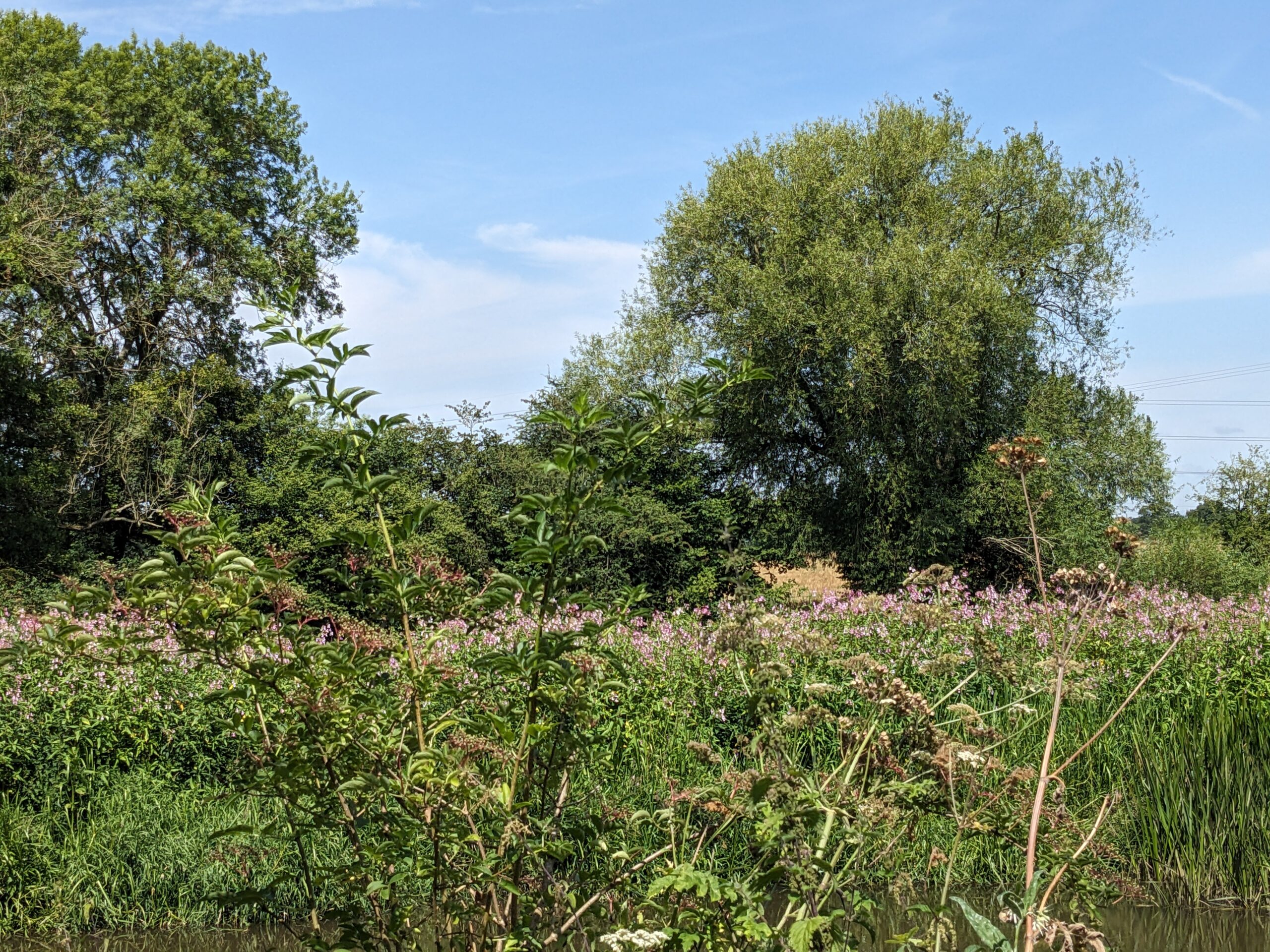
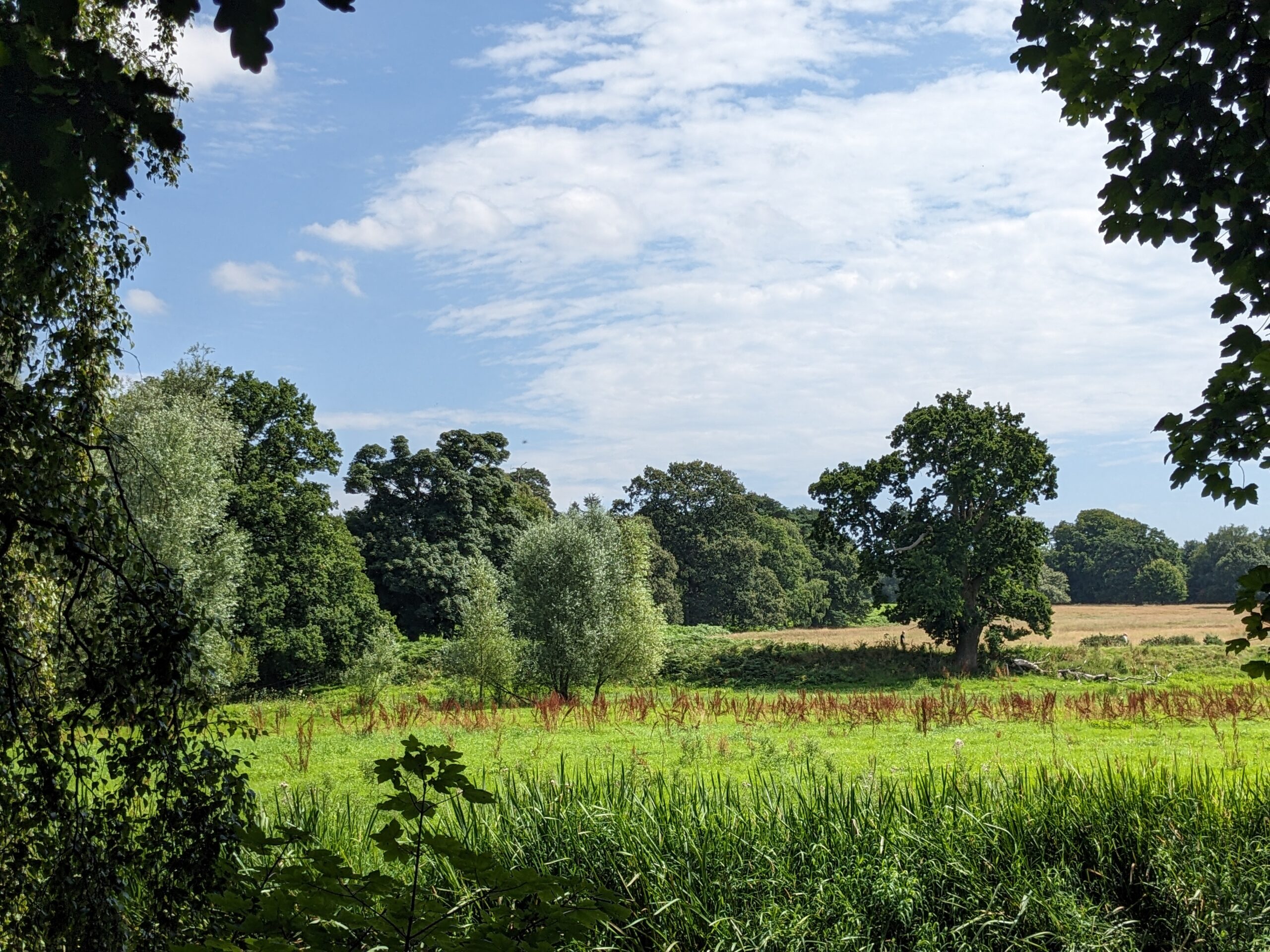
Curtained on the left and right of the view by tree foliage, a scene bottom-up starting with sedge type plants, spikey and dark green, giving way to bright green grass. Then beyond that a line of browned, spent plant, perhaps mugwort. Another band of green, this time thinner and a shrubby tree centre left. And centre right a taller darker leaved tree casting a shadow on the meadow to its left. Beyond this a hay or straw field with its yellow-beige hue. This field lined by trees. A pale-grey sky with a covering of flat cloud from mid left across to the far right.
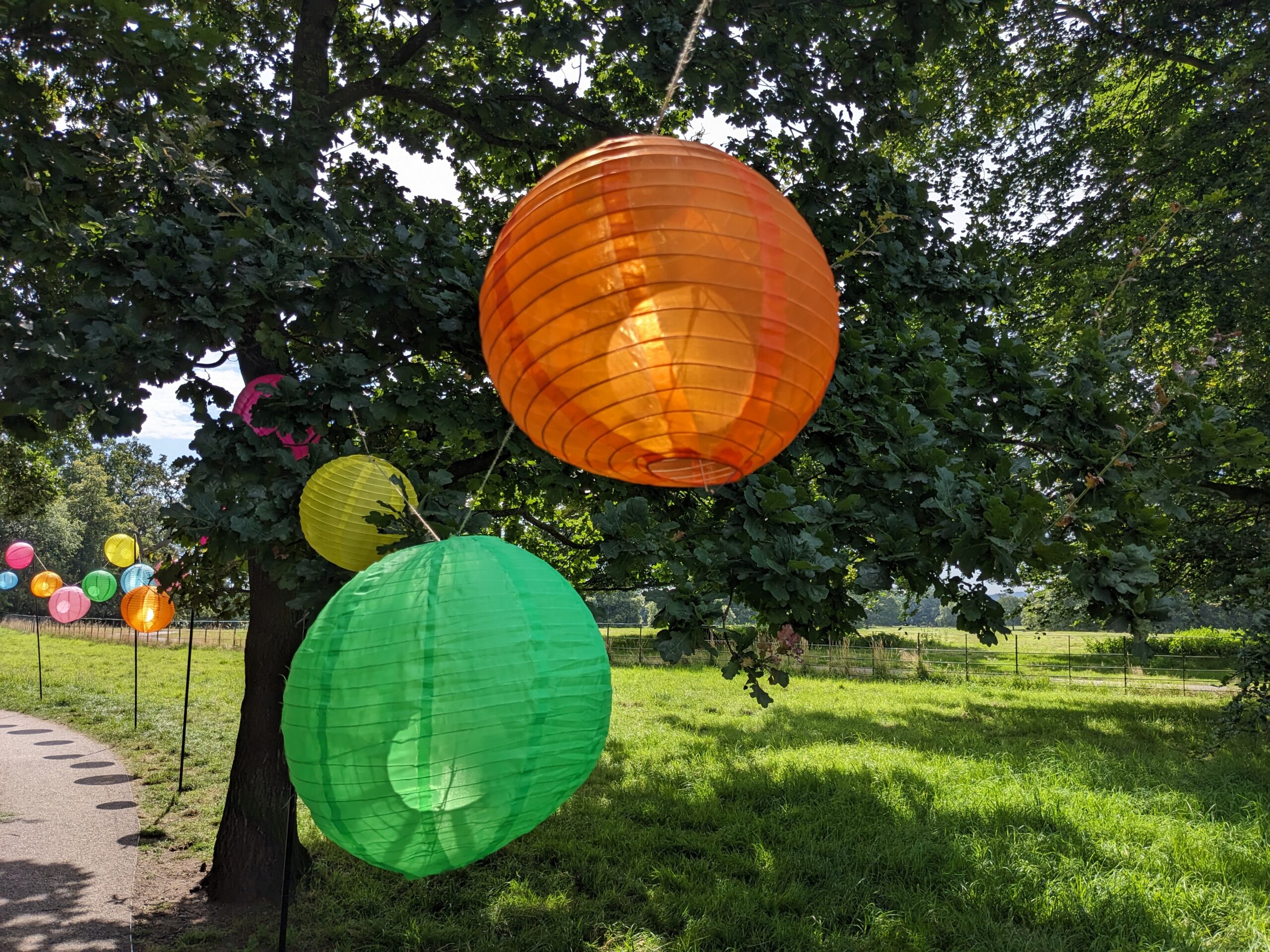
Hung from a wire, moving from right to left and into the distance, a tree separating them at one-point, spherical paper lampshades dipping and rising with the wire, orange, green and yellow before the large tree, the beyond orange, blue, yellow green, pink, orange, pink, blue and yellow. Standing guard at the path line between hardstanding and grass at the entrance to Attingham Park in Shropshire.

Tags: