
Both the Cheesewring and the Hurlers are near the village of Minions, north of Liskeard in South Cornwall. About an hour’s drive from Plymouth in Devon.
After a tense yet gifted ‘turned out fine’ experience of driving the Aston for what seemed like miles, along a overgrown, rarely used, super narrow lane and being challenged by not one, but two ford crossings, we arrived. Parking up, in one of the two free car parks.
We’d not noticed the weather as we’d navigated our way out of our misdirected perhaps mischief managed route … or rather the Aston’s sat nav’s roads of choice! But once we emerged back onto known roads it became evident that it was now a wild weather day Windy with angled rain.
We were pleased we were meeting a friend, or Scientist and I might both have chickened out of the walk up to the Cheesewring as we sat viewing the moor ahead of us from behind the rain splattered windscreen. It was going to be a very wet and unpleasant walk if this weather continued.
Extra layers, waterproofs, hats and walking boots on, we headed in the direction of the giant pebble stack, our friend who knew the Place, acting as guide.
Livestock, of the cow variety stood around the car park and in the surrounding area as we headed up the hill. Although we were, or Scientist was, immediately distracted from our focus for a quick look at the building that is now a heritage centre. It houses a permanent exhibition but was closed. Maybe once again the outcomes of touristing in the off-peak season.
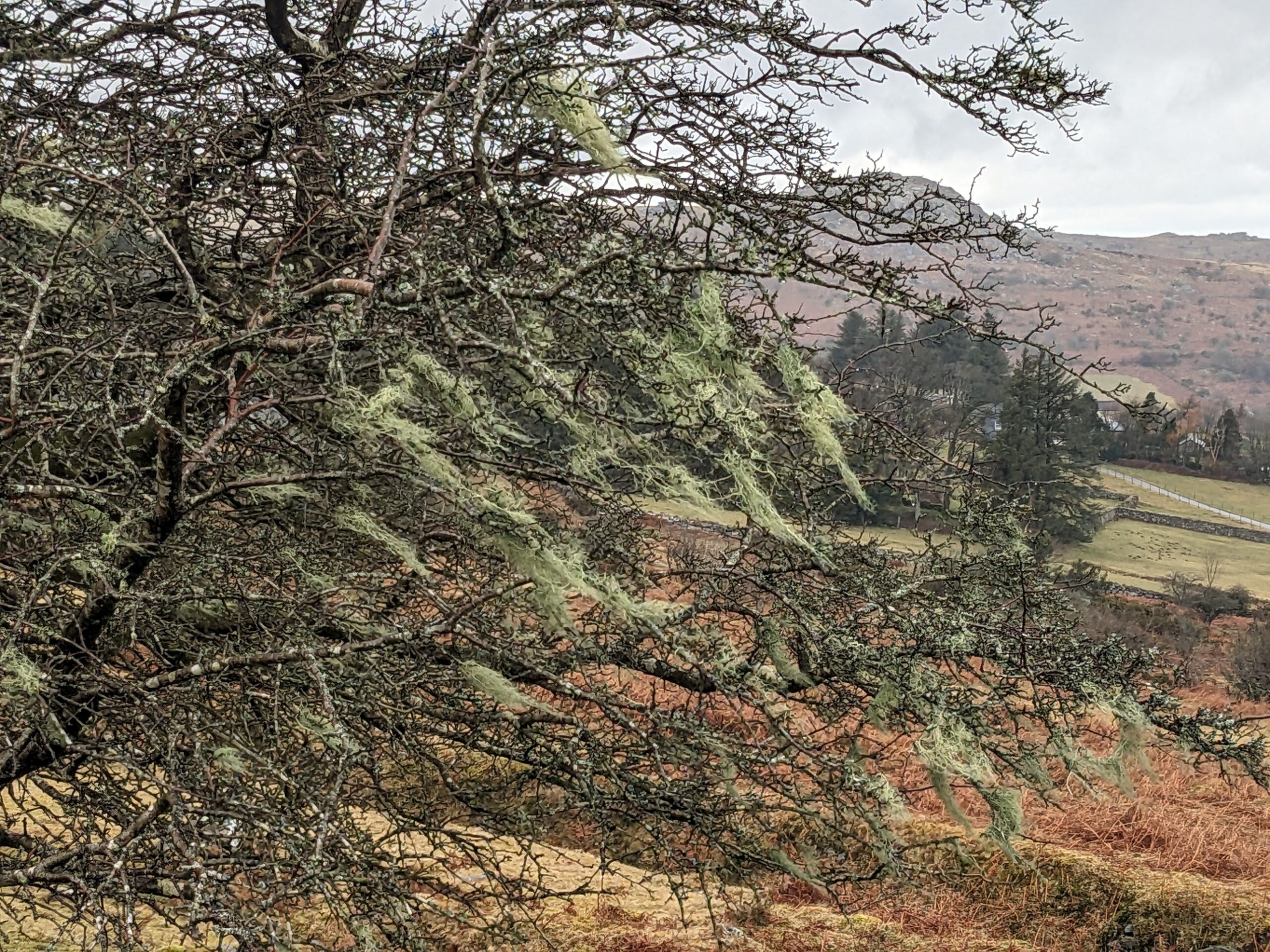
Back on-route, but not much further along, we were met by hawthorns with lichen-bunting, flapping; being blown almost horizontal in the whistling windy gusts. An usnea species, which in Devon I’d heard called ‘old man’s beard’. This particular lichen is a clean air indicator. A measure supplied by nature. And where there is pollution, it’s not in residence.
As the Cheesewring got nearer, the way seemed less obvious again. We had to skirt around to the left to avoid a large hole – an old quarry site.
Underfoot the pathways got narrower, soil compacted, more worn and lumpier with rocks and stones. Suggesting a choice of obvious routes again. A bit of an uphill climb, guided or enticed by the natural stairway, eroded by many previous footsteps.
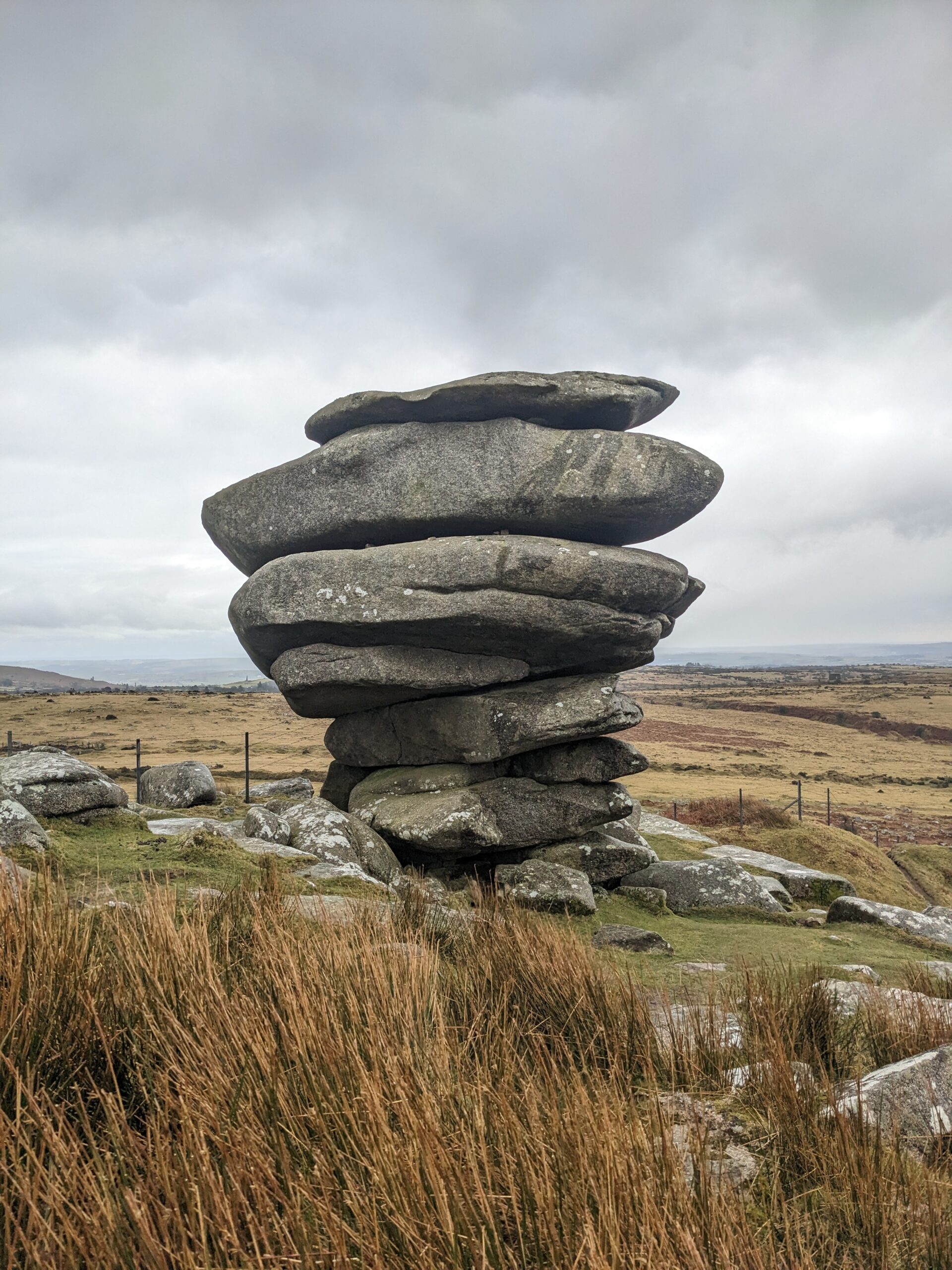
Then a moment of stillness, even the Elements halted from their onslaught. A surround sound of silence – so loud it was deafening. A shift, otherworldliness swirling. Each of us finding our own meeting with the unseen edge, so thin, separating reality from the ‘more than’ of this place. Perhaps we experienced the fabric of the veil between the two. Then once through this edge, another edge, the ‘aura’ if you like or the spirit of the Stone. Weathered giants, wind crafted, stone monuments in their glory. Powerful in status, silent, watchful wisdom keepers.
Each of us respectful in observing the marvellous and surreal. The artfulness of natural chaos. It’s much easier to believe these were put here by sentient beings, elements, giants or gods rather than being a random quirk of nature. But sentient or not, it seems the wind is a master of stone carving. This may be difficult to comprehend, but the wind is a powerful element, handless, yet it can tear down, remove, carry and push, so why not an artisan creator, with chisel and artist eye too? Perhaps something to ponder.
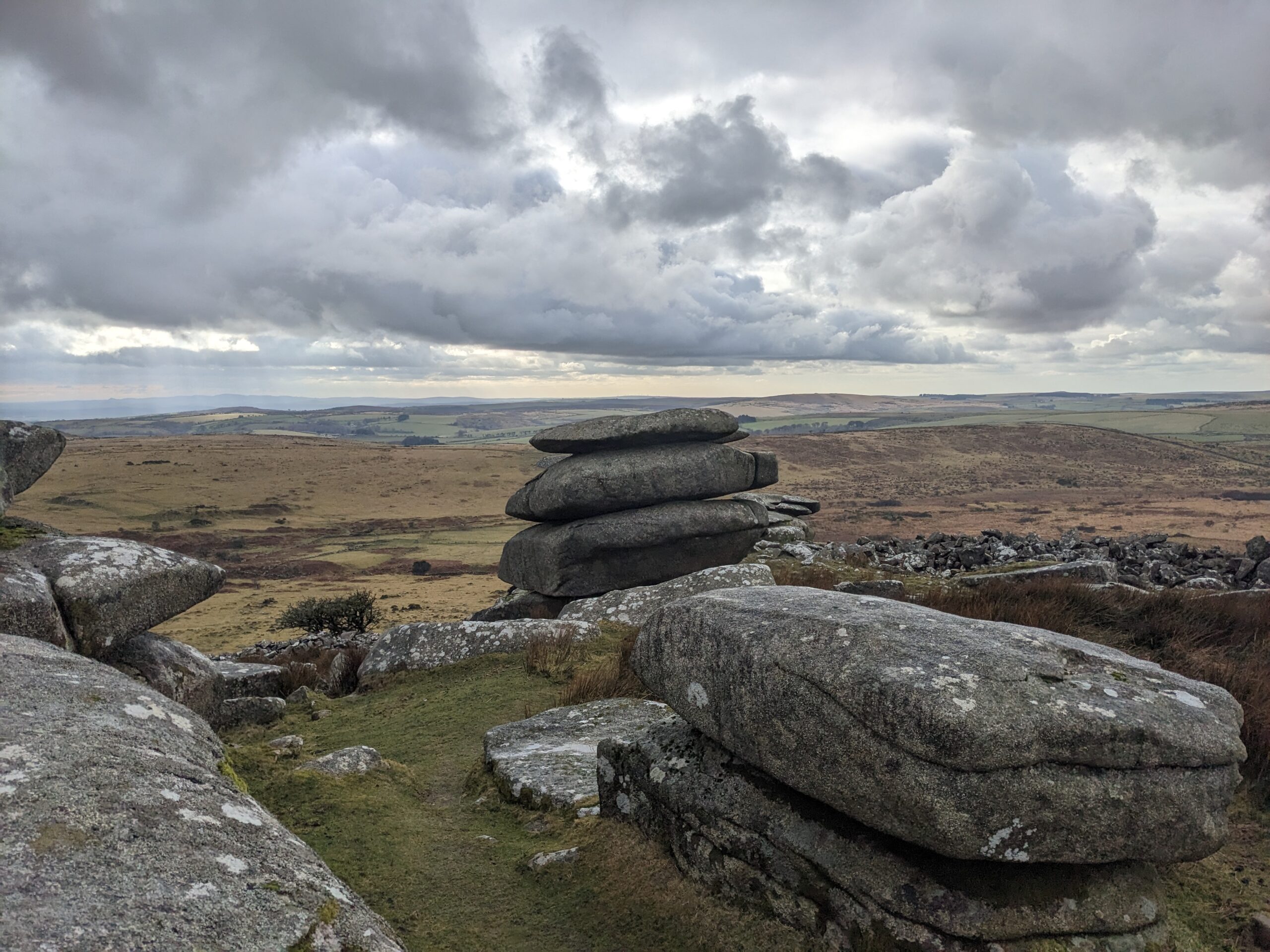
Scientist found a ‘thinking rock’ and sat. After a while of standing, I sat too, as did our walking companion. The sense of Place is awesome, its ‘bigness’, rather than size, something I’d not contemplated or experienced before arriving. The air feels different perhaps too – or maybe that was just because we’d chosen our sitting places to be out of the wind and all our nerve endings, element battered from the walk up, were still buzzing and over stimulated. Now in a calmer space, we felt them.
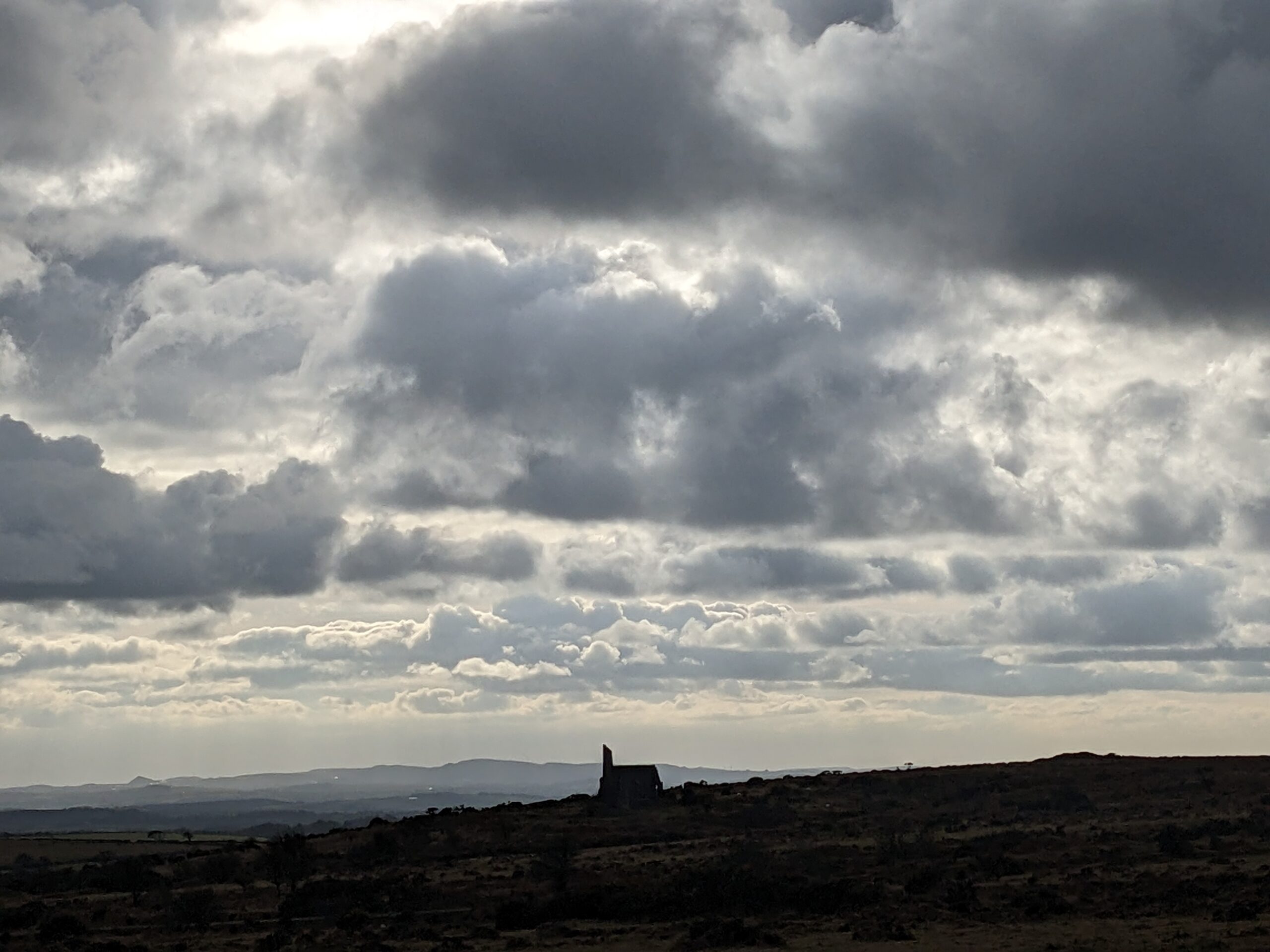
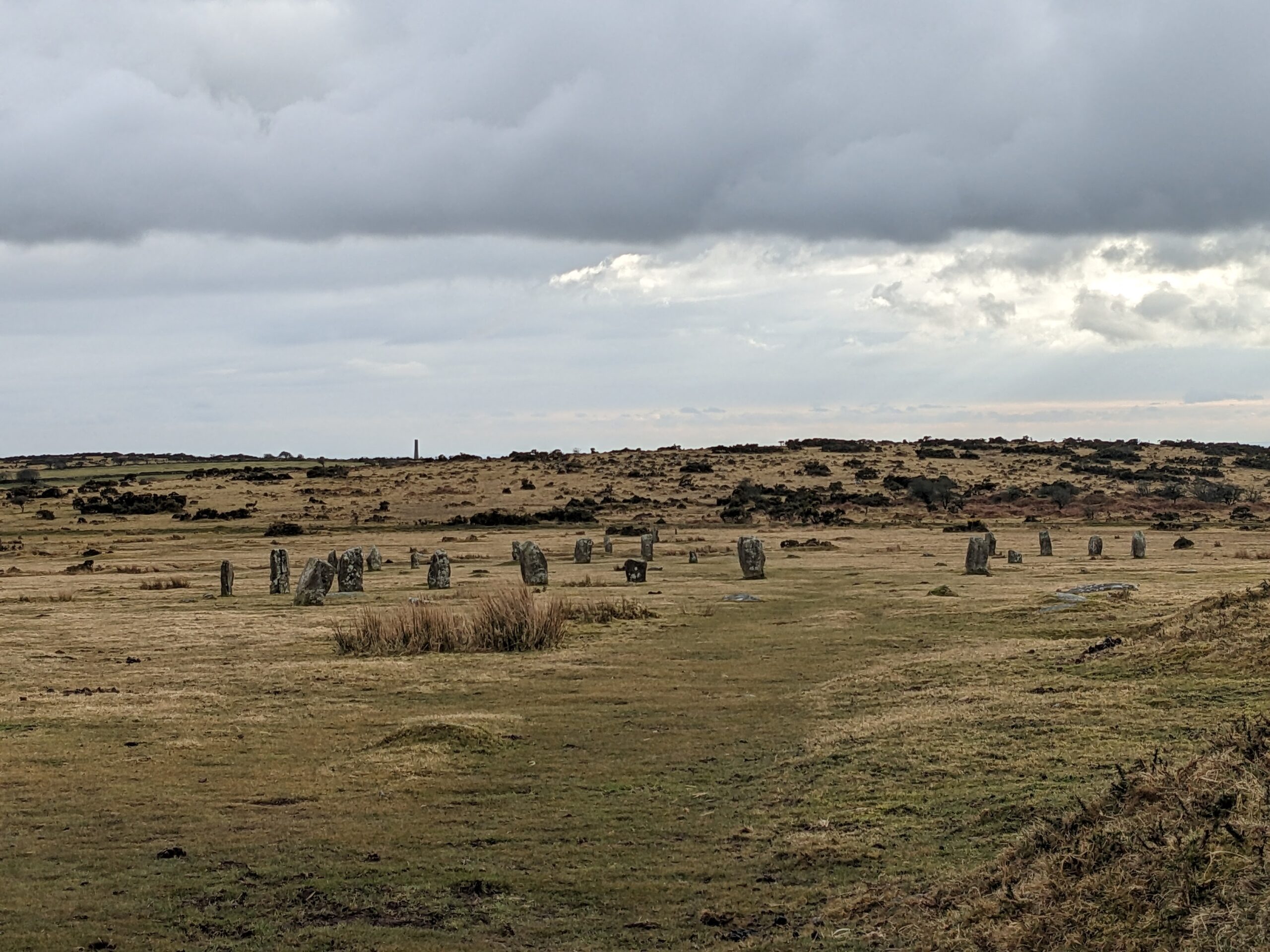
After some time, we retraced our steps and then headed towards the three stone circles that make up the Hurlers. Views of old buildings from the moor’s mining heritage decorating the landscape along with the scattered stones of the Hurles.